Arsenal Park Memorial Plaques
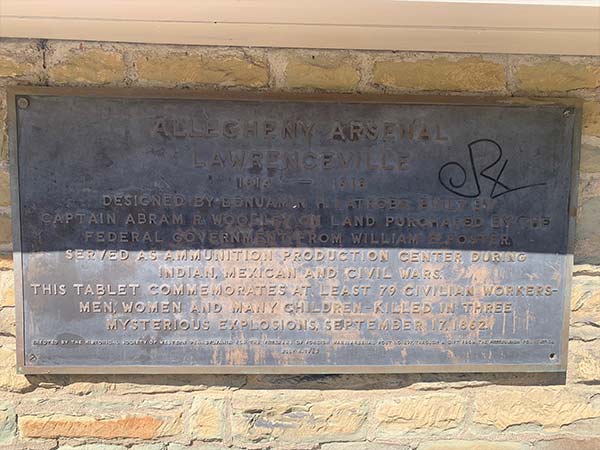
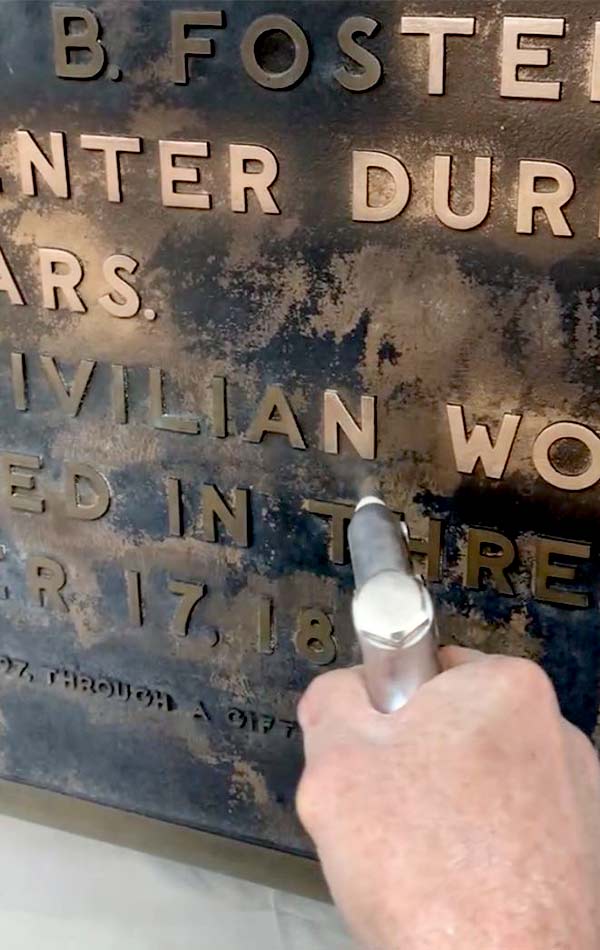
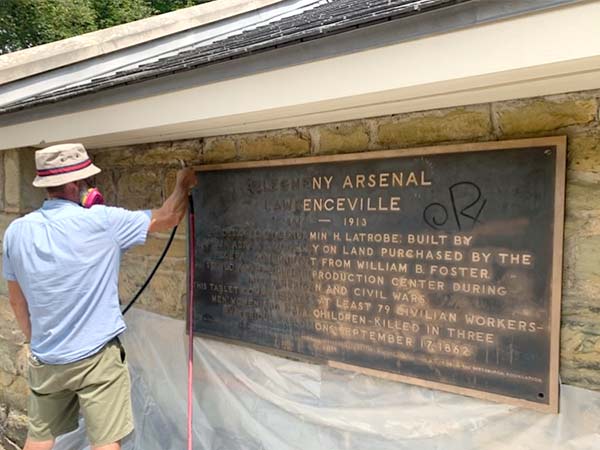
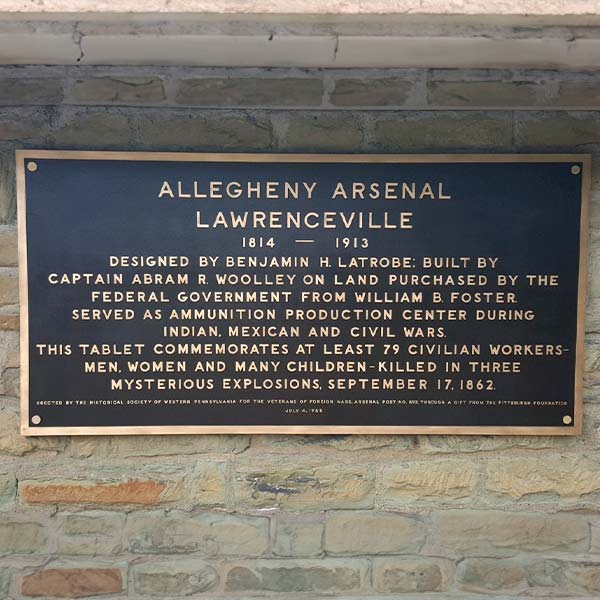
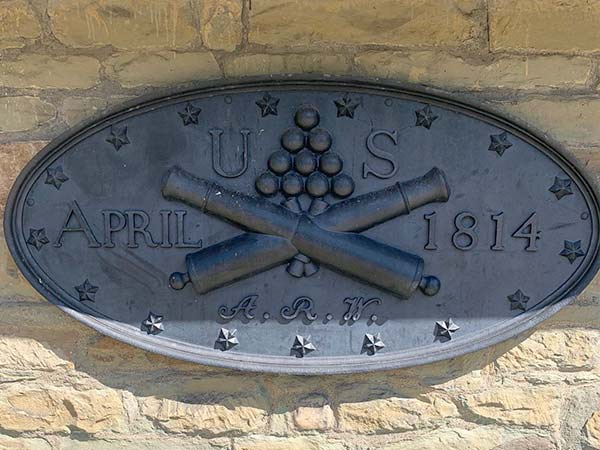
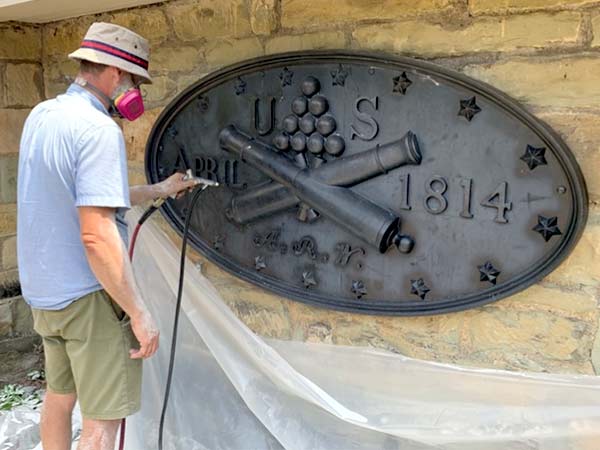
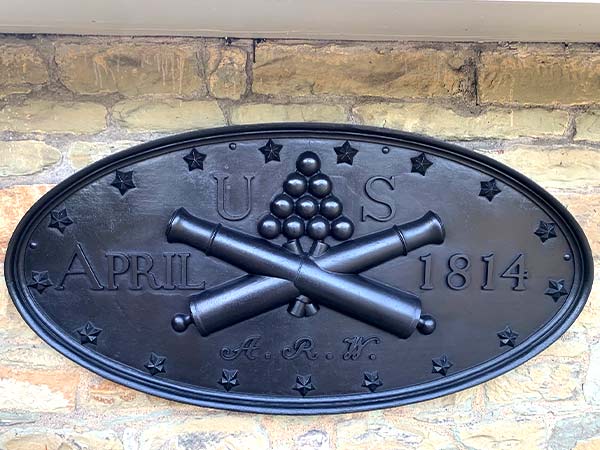
The images show the Allegheny Arsenal Memorial Plaque at Arsenal Park in the Lawrenceville neighborhood of Pittsburgh before, during and after refinishing in the summer of 2021. On the same day as the Battle of Antietam, September 17th, 1862; three explosions rocked the Allegheny Arsenal, which made gunpowder and bullets for the Union war effort. 79 people, mostly local women and children were killed, as many of the men were serving in the army. Abraham Lincoln wanted to suppress the disclosure of the battle casualties and the accident at the same time, to avoid negatively affecting northern moral.
The accident occurred at an area of the Allegheny Arsenal called “The Lab”, which is now a baseball field. The Lab was a grouping of stone buildings where materials were mixed to make gunpowder. It was known that the workers would sweep the gunpowder that dropped to the floor out the front door with brooms, which would accumulate in drifts on the sidewalks. Empty stacks of barrels were brought by horse-drawn wagon down an adjacent cobblestone lane for filling with gunpowder, the excess of which would be left heaped in the street. As the wagons pulled away, they left a thick trail of gunpowder down the cobblestone lane. It is thought the explosion was started by horseshoes sparking on a flint cobble. The massive explosion flattened and incinerated nearby structures and effected a disproportionate number of neighborhood women and children.
Civilian employment at the arsenal increased from a pre-war total of 308 to over 1100 workers. The main lab employed 158 workers.
The plaques are installed on a structure that is the remnant of an original powder magazine dating from 1814, now a maintenance shed for the park. Aside from the Arsenal Memorial Plaque, a black, bronze, oval Quartermaster Corps insignia dated 1814 that was originally part of the gate and was preserved, is now mounted on the old powder magazine. The plaque reads “1814 A.R.W”, reported by city records to indicate an individual: A.R. Wholey. Interestingly, the Wholey family still runs a popular outdoor meat and produce market in the warehouse district of Pittsburgh. Most of the arsenal buildings were demolished, but also still standing are two other stout magazine buildings on the former arsenal grounds, distinctive for their red-lead coloration, and a former officers' quarters on 39th Street.
The surface of the plaque was extremely oxidized and degraded. It had likely never been refinished. Vertical drip lines were etched into the patchy remnants of the chalked patina. Graffiti tags were present, and two round, patty shaped bolt covers were missing from the lower lag bolts. The A.R.W. plaque was covered with dust and pollen but was in otherwise good condition.
Both plaques were washed with soapy water and rinsed with fresh water. The raised lettering, relief decoration and raised polished frame on the Arsenal Memorial were brightened by peening with glass beads through an air abrasion tool. The background of the plaque was pared down through light air peening. The brightened areas were further finished with directional abrasion with 220 grit sandpaper.
The surface of the Arsenal Memorial was degreased by wiping with solvent on cotton cloths and was then given three spray coats of brown tinted synthetic lacquer. This step may seem odd, because it covers the brightened areas with a semi-opaque coat of brown lacquer. But then the lacquer is cleared from the raised surfaces by using a solvent moistened block covered with cotton jersey. The block is run over the high points of the brightened areas, bridging it between words and numbers on nearby lines of text. The solvent-moistened block clears the lacquer and reveals a bright, raw bronze surface. Removal of tinted lacquer from relief decoration needs to be artfully done, subtracting patina until the motif is in crisp contrast to the background. Three coats of clear synthetic lacquer were spray applied overall to seal the surface.
Two replacement bolthead covers were fabricated by machining a ½” thick piece of solid acrylic sheet. These were adhered in place over the original lag bolts with epoxy gel.
The A.R.W. Wholey plaque was given a torch-applied tinted paste wax coating: flooring wax mixture with dry pigments which was brush applied and melted into the surface with a propane torch. After cooling, the surface was buffed to a sheen.
The Arsenal was established by the U.S. Army Ordnance Department near Pittsburgh in 1814. It was situated on 30 acres of land bordering the Allegheny River in the community of Lawrenceville. The arsenal served as a supply and manufacturing center for the troops in the west. Its peak years came during the Civil War, especially when the manufacture of cartridges, became a high priority.